
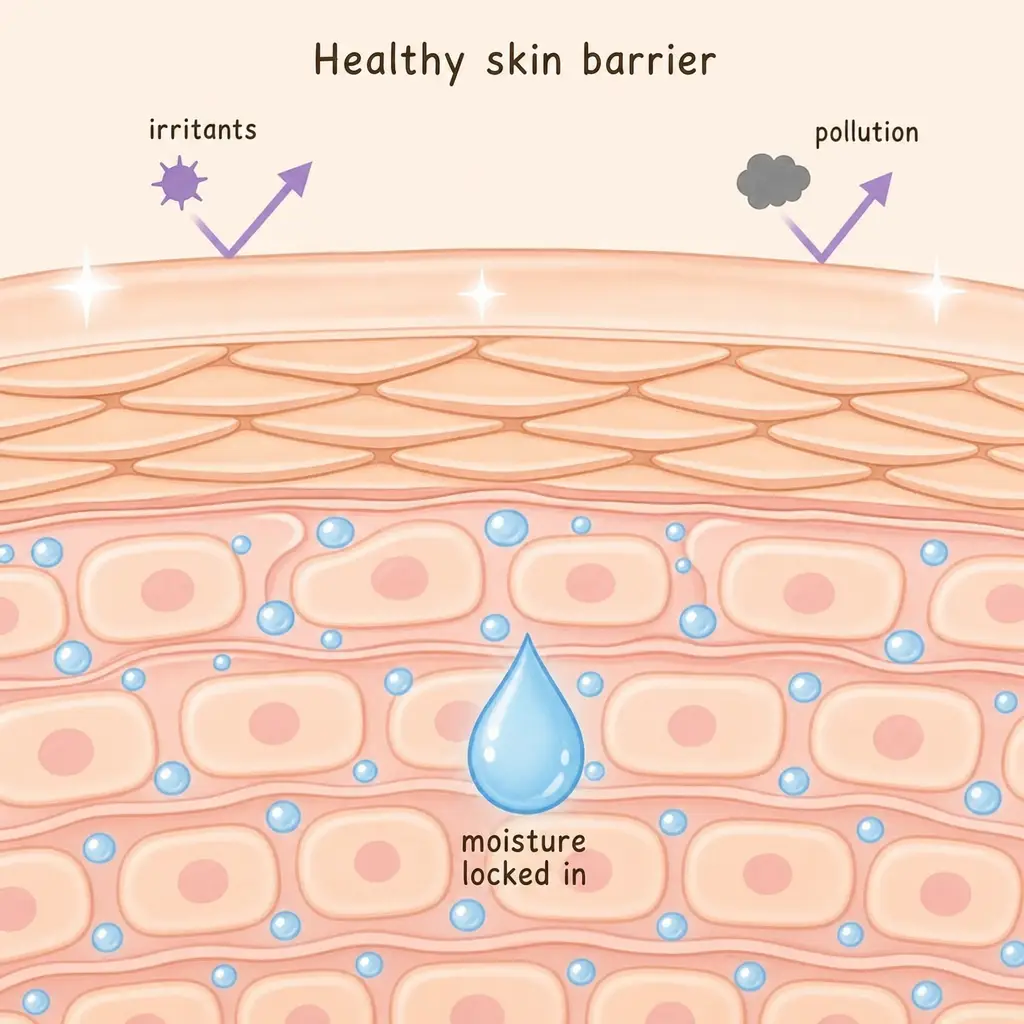
Your skin barrier is the outermost protective layer that helps keep moisture in and irritants out. When it’s stressed, skin can feel tight, rough, flaky, stinging or irritated, or suddenly reactive to products that used to feel fine. This guide explains what a damaged skin barrier is, what commonly triggers it, and how to support recovery with a simplified routine.
What Is the Skin Barrier?
The skin barrier is often described as a bricks-and-mortar system: skin cells are the bricks, and lipids are the mortar that helps hold hydration and defend against everyday stress. When the barrier is functioning well, skin is better able to stay comfortable, look smoother, and tolerate routine skincare.
A damaged skin barrier doesn’t look identical for everyone. Some people notice dryness and flakes; others notice burning, stinging, or sudden intolerance to previously tolerated actives. In barrier support, doing less—more consistently—usually works better than doing more.

Common Signs Your Barrier Needs Support
- Tightness after cleansing, especially if it lingers
- Stinging from products that normally feel gentle
- Flaking, rough patches, or a papery texture
- Red-looking or easily flushed skin
- Increased sensitivity to weather, sweat, or exfoliation
- Breakouts alongside dryness
- A shiny surface that still feels dehydrated underneath
If discomfort is severe or persistent—or you have cracking, swelling, bleeding, or intense itching—seek advice from a qualified professional.
Why Does the Skin Barrier Become Damaged?
The barrier is most often stressed by repeated stripping or over-treatment. Common triggers include harsh or frequent cleansing, over-exfoliation, stacking too many active ingredients, inconsistent moisturizing, and unprotected sun exposure.
Environmental conditions can contribute, too. Cold weather, wind, indoor heating, air conditioning, and low humidity can increase water loss from the skin’s surface, making a damaged skin barrier feel worse.
Skin Barrier Repair Routine: Simplify First
The core of skin barrier repair is reducing stress while supporting hydration, moisture, and daily protection. Keep your routine short enough that you can do it consistently—and so you can clearly see what helps.
AM: Simple and Protective
1. Gentle cleanse (optional).
If you wake up comfortable, a water rinse may be enough. Otherwise, use Tina Mattern Amino Foam Face Wash, a gentle cleanser designed to remove dirt, oil, and makeup without stripping the skin.
2. Hydrate (optional).
If skin feels tight or dehydrated, add Tina Mattern Hydra-Peptide Serum as a lightweight hydrating serum step.
3. Moisturize.
Choose a comfortable moisturizer that your skin already tolerates. When the barrier feels stressed, avoid introducing unnecessary new products simply to add another step.
4. Sun protection.
Finish with Tina Mattern 3 IN 1 Primer With SPF 50 as the final daytime step.
PM: Calm, Then Moisturize
1. Gentle cleanse.
Use Tina Mattern Amino Foam Face Wash to remove dirt, oil, and makeup without aggressive scrubbing or very hot water.
2. Hydrate.
Apply Tina Mattern Hydra-Peptide Serum after cleansing as your hydrating serum step.
3. Moisturize.
Follow with a gentle moisturizer that your skin already tolerates, applying a little more to areas that feel tight or dry.
What to Avoid While Your Barrier Recovers
During recovery, avoid anything that repeatedly makes skin feel hot, stripped, prickly, or tight.
- Physical scrubs, cleansing brushes, or rough washcloths
- Frequent exfoliating acids or resurfacing routines
- Strong actives used on consecutive nights if you’re reactive
- Very hot water and long steamy showers on the face
- Picking at flakes or dry patches
- Introducing multiple new products at once
This is usually temporary. Once your skin feels stable, reintroduce one item at a time and track your response.
How to Choose Products for a Damaged Skin Barrier
When your skin barrier is compromised, your best product is one you can use consistently without discomfort. Prioritize a non-stinging feel, a texture you’ll actually apply daily, and compatibility with a simple routine.
- Comfort first: Discontinue anything that burns or stings on application.
- Texture matters: Choose lighter products for daytime if needed and richer products at night if your skin feels tight.
- Routine fit: Products should layer easily with a gentle cleanser and daytime SPF.
- Keep it simple: Keep the product lineup stable while the barrier settles.
Practical Checklist
- Temporarily simplify your routine to the essentials.
- Moisturize before skin feels fully dry.
- Use lukewarm water and avoid rubbing or over-cleansing.
- Reintroduce actives slowly, one at a time, only after comfort returns.
- Note triggers such as weather shifts, travel, over-exfoliation, or new products.
Long-Term Barrier Resilience
Long-term skin barrier support is mostly maintenance: gentle cleansing, steady moisturizing, and consistent sun protection. If you decide to use stronger treatments later, build them around this foundation so barrier stress doesn’t become a recurring cycle.